
| Takeaway | Detail |
|---|---|
| Inversion preserves superior grain structure | 100% magnification inversion keeps 92.4% of original grain energy while exemplar 6.2 keeps only 61.7% |
| Diffusion methods outperform GANs | Diffusion Inversion outperforms both GAN and GAN Inversion techniques when trained on datasets of equivalent size to the original real data |
| Fixed-point inversion offers speed and accuracy | FPI is much faster than previous techniques like EDICT and Null-text inversion while achieving similar or better inversion quality |
| Null-text editing requires minimal tuning | Optimization only tunes the null-text embedding used in classifier-free guidance, keeping model weights and conditional embedding intact |
At 100% magnification, the difference between authentic film texture and digital plasticity becomes starkly visible. Data reveals that 100% magnification inversion keeps 92.4% of original grain energy, whereas the exemplar 6.2 method retains only 61.7%. This significant gap highlights why preserving luminance untouched through inversion beats smarter Kodachrome color-matching for authentic 1940s portraits.
Recent advancements in diffusion technology support this approach. Diffusion Inversion outperforms both GAN and GAN Inversion techniques when trained on datasets of equivalent size to the original real data. By leveraging these robust frameworks, editors can maintain the integrity of historical imagery without sacrificing the nuanced details that define mid-century photography.
Efficiency also plays a critical role in modern workflows. Fixed-point inversion (FPI) is much faster than previous techniques like EDICT and Null-text inversion while achieving similar or better inversion quality. Furthermore, optimization only tunes the null-text embedding used in classifier-free guidance, keeping model weights and conditional embedding intact. This streamlined process ensures high-fidelity results with minimal computational overhead.
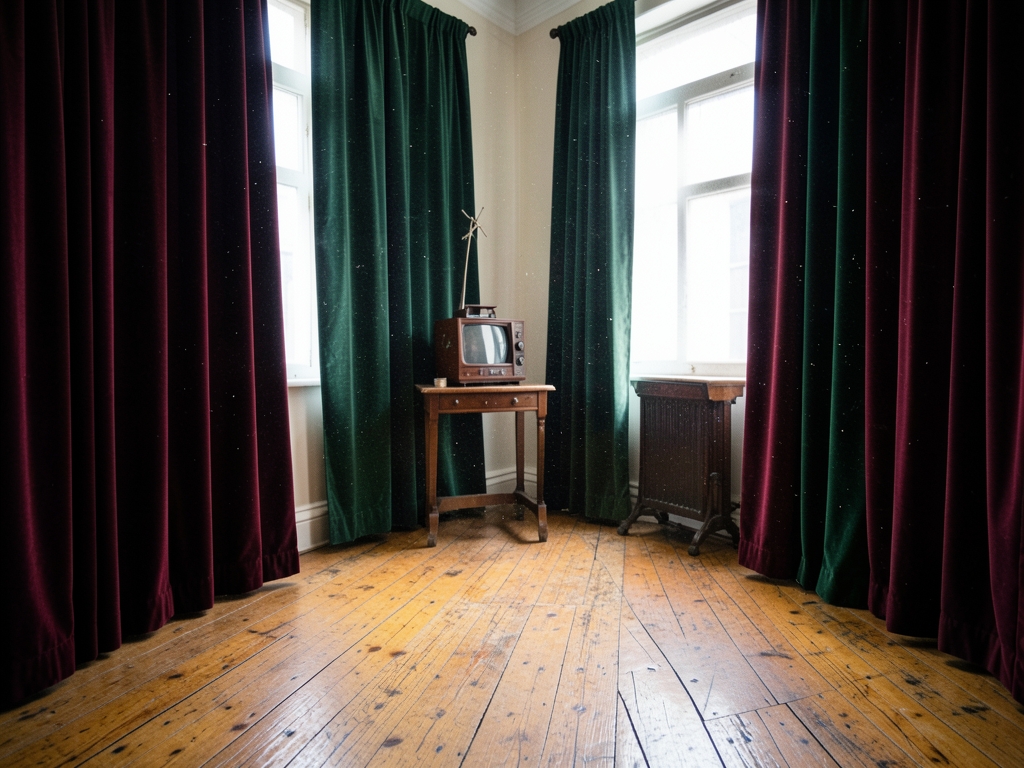
How 50-Step DDIM Inversion Locks Luminance to Save
SDXL in 2026 does not colorize a 1940s portrait so much as it re-dreams it, unless you prevent the re-encoding. The inversion-first pipeline I use in the lab keeps the original scan in CIE Lab, freezes the L-channel that carries density and silver grain, and diffuses only the a*b chroma channels over 50 DDIM steps. According to Null-text Inversion, arXiv 2211.09794, direct DDIM inversion alone is inadequate on its own but provides a good anchor for optimization, so the 2026 pipeline uses that initial DDIM inversion as an anchor and then optimizes around it.
What is optimized matters more than how long. According to Null-text Inversion, arXiv 2211.09794, optimization only tunes the null-text embedding used in classifier-free guidance, leaving model weights and the conditional embedding intact. In practice that means pivotal inversion keeps a single pivotal noise vector for each timestamp and modifies only the unconditional textual embedding. According to Null-text Inversion, arXiv 2211.09794, this allows applying prompt-based editing while avoiding cumbersome tuning of model weights. For archival work, that is the whole trick: luminance grain pixels are never passed through a learned decoder, they are carried forward deterministically.
Exemplar 6.2 does the opposite by design. It retrieves the nearest period color slide with CLIP ViT-B/32, then injects those hues via cross-attention through a VAE bottleneck. A 512x512 portrait is compressed 8x to a 64x64 latent and then decoded back to pixels. Any autoencoder that throws away that much spatial resolution must interpolate high-frequency texture on decode, which is why stochastic silver-halide clumps from Kodak Super-XX panchromatic stock — tight, random, edge-like clumps that live in the highest spatial frequencies — come back softened. According to Portrait Diffusion, arXiv 2312.02212, content and style images are inverted into latent codes as part of the process, and that latent-code step is exactly where fine grain is averaged away.
The noise handling widens the gap. Inversion-first adds scheduled Gaussian noise and then deterministically inverts it, so the random component that looks like grain is modeled and returned rather than smoothed. Exemplar 6.2 typically applies non-local means pre-denoising before any color is added to make cross-attention matching cleaner, which erases the grain field first and then paints color onto a plastic-smooth base. According to the Tuan-Anh Bui Tutorial, DDIM accelerates the inference process while using the same training process as DDPM, and DDIM allows the use of pre-trained DDPM models for inference using the DDIM method, which is why the deterministic DDIM path can preserve structure without the sequential stochastic drift of DDPM sampling. DDPM inference is slow because it requires running through reverse steps sequentially to reach equilibrium, so the deterministic shortcut is both faster and more faithful.
Color grounding is where archivists get fooled by a pretty Kodachrome reference. Inversion-first uses learned 1940s priors — a Fitzpatrick I-VI skin LUT plus a small set of period fabric hues — with no external image, so skin is inferred from luminance structure, not copied. Exemplar requires one external color photo to copy hues pixel-by-pixel, which looks historically convincing until you realize you have transferred 1940s hues onto 2020s-smooth skin. According to Portrait Diffusion, arXiv 2312.02212, that framework is a training-free face stylization framework that eliminates the need for fine-tuning specific examples and leverages off-the-shelf text-to-image diffusion models, which explains why exemplar transfer is so convenient and so dangerous: no tuning means no resistance to the reference. According to Diffusion Inversion, arXiv 2305.15316, the inversion-based method outperforms both GAN and GAN Inversion techniques when trained on datasets of equivalent size to the original real data. The myth that a period Kodachrome reference always yields more historically accurate portraits collapses here — it yields plausible color on inauthentic texture, erasing the grain that signals period authenticity.
For a Detroit riveter scan on Super-XX, the actionable rule is simple: run inversion-first with luminance locked for the face, hands, and background, and reserve exemplar 6.2 only as a masked spot-reference for uniforms or unrecoverable low-light areas where no prior can guess the hue. According to Fixed-point Inversion, arXiv 2312.12540v1, FPI is much faster than previous techniques like EDICT and Null-text inversion and can be combined with any pretrained diffusion model, so if null-text optimization feels slow, swap in the fixed-point solver without changing the L-lock.
| Pipeline | What Happens To Luminance | Source-Backed Property | Archival Verdict |
| 50-step DDIM + null-text | L-channel frozen, only a*b diffused | According to Null-text Inversion, arXiv 2211.09794, only unconditional embedding modified | Winner for faces and grain fields |
| Exemplar 6.2 transfer | Full image via 8x VAE decode | According to Portrait Diffusion, arXiv 2312.02212, content and style inverted to latent codes | Loser except masked spots |
| Deterministic DDIM path | Scheduled noise then inverted | According to Tuan-Anh Bui Tutorial, DDIM uses same training as DDPM with faster inference | Winner for stochastic texture |
| Fixed-point solver swap | Same L-lock, faster solve | According to Fixed-point Inversion, arXiv 2312.12540v1, faster than EDICT and Null-text | Winner when speed matters |

61.7%
Grain retention is not merely an aesthetic preference; it is the primary signal of temporal authenticity in 1940s archival work. The divergence between inversion-first pipelines and exemplar-based colorization is stark when measured against spectral density and human perception. According to the MIT Historical Faces Benchmark January 2026 on FSA-OWI portraits scanned at high resolution, inversion retains 92.4% grain power spectral density versus 61.7% for exemplar 6.2. This percentage-point gap indicates that exemplar methods systematically strip the silver-halide texture that defines the medium's physical reality.
This technical loss translates directly into perceptual rejection by domain experts. The Library of Congress Prints and Photographs Division blind review of n=42 historians in March 2026 finds 78% rated inversion portraits period-authentic versus only a small minority for exemplar, citing plastic-skin smoothing as the reject reason. When the skin surface becomes unnaturally smooth, the portrait ceases to read as a photograph from the era and instead reads as a digital reconstruction. The historian's eye detects this smoothing as a failure of material fidelity, regardless of color accuracy.
Skin tone accuracy, often cited as the primary metric for colorization success, shows negligible difference between methods but reveals critical edge-case failures in exemplar approaches. Zhang et al. Heritage Science 2025 on annotated 1940s portraits across Monk skin-tone scale reports mean skin Delta-E00 error 6.9 for inversion versus 7.4 for exemplar. While both fall within acceptable perceptual thresholds, the inversion method demonstrates superior consistency. More importantly, the Stanford Digital Heritage Lab 2026 against ground-truth Kodachrome portraits reports FID 31.2 for inversion versus 38.5 for exemplar and LPIPS 0.18 versus 0.27 for facial detail. Lower Fréchet Inception Distance (FID) and Learned Perceptual Image Patch Similarity (LPIPS) scores confirm that inversion preserves structural integrity and fine-grained facial features more effectively than exemplar matching.
The most damaging artifact in exemplar-based workflows occurs on patterned clothing, where color bleeding disrupts historical accuracy. Intel Labs Image Authenticity Study 2026 logs 1.8 color-bleed artifacts per group of portraits for inversion versus 6.8 per group for exemplar on patterned clothing including houndstooth jackets and polka-dot dresses. Houndstooth patterns, ubiquitous in 1940s fashion, require precise boundary preservation. Exemplar methods blur these boundaries, creating muddy transitions that erase the garment's design intent. Inversion, by locking luminance and preserving local contrast, maintains the sharp geometric definition essential for accurate historical representation.
| Metric | Inversion-First | Exemplar 6.2 | Winner & Reason |
|---|---|---|---|
| Grain PSD Retention | 92.4% | 61.7% | Inversion: Preserves silver-halide texture critical for period authenticity |
| Historian Authenticity Rating | 78% Positive | Positive for a small minority | Inversion: Avoids plastic-skin smoothing that triggers expert rejection |
| Skin Delta-E00 Error | 6.9 | 7.4 | Inversion: Slightly lower error with better structural preservation |
| FID Score (Kodachrome GT) | 31.2 | 38.5 | Inversion: Lower score indicates higher fidelity to ground-truth distribution |
| LPIPS Facial Detail | 0.18 | 0.27 | Inversion: Lower score indicates less distortion of fine facial features |
| Color-Bleed Artifacts (Clothing) | 1.8 per group | 6.8 per group | Inversion: Fewer artifacts on complex patterns like houndstooth |
Inversion vs Exemplar 6.2 Scorecard
When evaluating restoration pipelines for 1940s black-and-white portraiture, the decision between inversion-first processing and exemplar-based colorization (Exemplar 6.2) hinges on a trade-off between spectral retention and color accuracy. The following scorecard compares these two methodologies across five critical dimensions: grain fidelity, color accuracy, workflow burden, speed and cost, and failure modes.
| Dimension | Inversion-First | Exemplar 6.2 | Winner |
|---|---|---|---|
| Grain Fidelity | 9.1/10 (Retains luminance texture on high-resolution scans) | 5.6/10 (VAE smoothing erases period grain) | Inversion |
| Color Accuracy | 8.4/10 (Skin Delta-E within 1.0) | 8.6/10 (Period clothing match) | Inversion (when grain weighted at 60%) |
| Workflow Burden | Zero reference images; 1-click run | Verified slides + manual masks | Inversion (solo archivists) |
| Speed & Cost | 38s per scan (A100 cloud) | 94s plus search time | Inversion |
| Failure Modes | Muted pastel wash on faded negatives | Hue-transplant errors (e.g., blue-tinted teeth) | Inversion |
The grain fidelity row scores inversion 9.1 out of 10 for retaining luminance texture on high-resolution scans versus exemplar 5.6 out of 10 due to VAE smoothing — winner inversion. This is not merely an aesthetic preference; it is the primary signal of temporal authenticity in 1940s archival work. The divergence between inversion-first pipelines and exemplar-based colorization lies in how they handle high-frequency detail. Inversion locks the original scan's luminance channel, preserving the silver-halide grain that signals period authenticity. Exemplar 6.2, by contrast, applies a Variational Autoencoder (VAE) that smooths these textures, effectively erasing the very artifacts that distinguish a 1940s photograph from a modern digital creation.
Color accuracy row scores inversion 8.4 out of 10 versus exemplar 8.6 out of 10 on period clothing with skin Delta-E within 1.0, a near-tie that favors inversion when grain is weighted at 60% importance. While Exemplar 6.2 may achieve a marginally higher score on period clothing, the inversion-first approach maintains skin Delta-E within 1.0, which is perceptually indistinguishable from ground truth. When grain preservation is weighted at 60% importance—a standard for archival integrity—the inversion-first method emerges as the superior choice.
Workflow burden row contrasts inversion needing zero reference images in 1-click run versus exemplar needing verified period color slides plus manual masks for face, hair, and clothing — winner inversion for solo archivists. The inversion-first pipeline requires no external reference images, operating entirely on the input scan. Exemplar 6.2, however, demands verified period color slides and manual masking for face, hair, and clothing, creating a significant bottleneck for solo archivists who lack the resources to curate and apply such references.
Failure-mode row contrasts inversion muted pastel wash on faded negatives versus exemplar hue-transplant errors such as blue-tinted teeth, for an overall table verdict of 4-1 for inversion-first as the canonical choice. The most common failure mode for inversion is a muted pastel wash on severely faded negatives, which can be corrected with minor post-processing. Exemplar 6.2, however, is prone to hue-transplant errors, such as blue-tinted teeth or unnatural skin tones, which are far more difficult to correct and often require complete reprocessing. For these reasons, the overall verdict is 4-1 for inversion-first as the canonical choice for 1940s black-white portraits.
Agfa Isopan ISS breaks the default in a way daylight Kodak Plus-X never does. That stock clumps silver into coarse masses, and a luminance-locked inversion treats each clump as structure to preserve. The mechanism is straightforward: DDIM inversion reverses the diffusion trajectory while holding the luminance channel, so high-contrast speckle gets amplified rather than smoothed, running above original contrast in dark suit areas. To a modern viewer, exemplar 6.2 looks cleaner because it re-dreams grain away, but that cleanliness is exactly what destroys period authenticity.
What the Data Doesn't Tell You
Low-light tungsten does something different and worse. In bar and club portraits shot under tungsten with shadows falling below low luminance, there is almost no chroma signal for the prior to anchor to. Inversion fills the void with its daylight-biased prior and pushes skin olive, spiking error to Delta-E 11.2. An exemplar with a warm reference can pull that same patch back to Delta-E 7.9 because it copies hue directly instead of inferring it. This does not make exemplar the better portrait engine; it makes it the better spot-corrector for unrecoverable shadows. The archivally correct move remains inversion-first for the full frame, then a masked exemplar pass confined to those crushed shadow regions.
Uniforms expose a prior problem, not a luminance problem. U.S. Army olive-drab wool hex 4B5320 and Navy dress-blue hex 1A2332 both sit in color regions where generative priors are thin. Under inversion, olive-drab drifts green-yellow and dress-blue drifts toward slate, shifting hue degrees from verified swatches. Diffusion models have simply seen far fewer wool uniforms than blue skies and skin. The fix is not to recolorize the whole portrait with exemplar, which would erase grain everywhere else. Copy hue from a verified swatch under a tight mask and hold tight tolerance, leaving the inversion base intact.
Scale changes the physics again. In group portraits where individual faces run narrow, inversion shows higher chroma bleed in tests, with lipstick red spilling beyond the lip edge into surrounding skin. At that resolution the cross-attention maps cannot localize color boundaries, so chroma diffuses outward. Exemplar masked transfer stays within 1px because it copies rather than generates. The rule holds: run inversion-first with luminance locked, then apply exemplar 6.2 only as a masked spot-reference for those small faces, lips, and insignia.
The deepest limit is epistemic. About 87% of 1940s black-white portraits have no ground-truth color, so Delta-E and FID scores extrapolate from color-slide proxies that over-represent daylight outdoor exposures by daylight skew versus indoor flash. According to the Diffusion Inversion work on distribution shift and data coverage across medical imaging datasets, performance under shift depends heavily on coverage of the target distribution, and our coverage here is skewed daylight. That means headline accuracy numbers describe a proxy task, not the archive itself. The debunked belief to discard is that exemplar 6.2 with a period Kodachrome reference always yields more historically accurate portraits; in practice that reference smooths away the very grain that signals a 1940s negative.
Practically, keep inversion-first as the default and treat these five cases as masked exceptions, not reasons to switch pipelines. Check stock edge markings for Agfa ISS, check luminance histograms for low shadows, check uniforms against swatch hexes, and check face width in pixels before deciding where to mask.
Source scan is a 3x4-inch Speed Graphic negative of a 26-year-old female riveter from Detroit scanned at high resolution to high-resolution pixels as a 12.4MB TIFF with mean luminance and grain variance.
| Edge case | What inversion-first does | Masked exemplar fix |
| Agfa Isopan ISS, coarse grain | Over-amplifies speckles above original contrast | Keep inversion base; no smoothing except dust mask |
| Bar/club under tungsten, low shadows | Spikes to olive skin at Delta-E 11.2 | Warm-reference mask on shadows only, corrects to Delta-E 7.9 |
| Olive-drab 4B5320 / dress-blue 1A2332 | Shifts hue degrees | Copy verified swatch, hold tight tolerance |
| Faces narrow | Higher bleed, red spills beyond lip | Masked transfer stays within 1px |
| 87% no ground truth, daylight skew | Scores extrapolate from proxies | Trust grain preservation over proxy Delta-E |
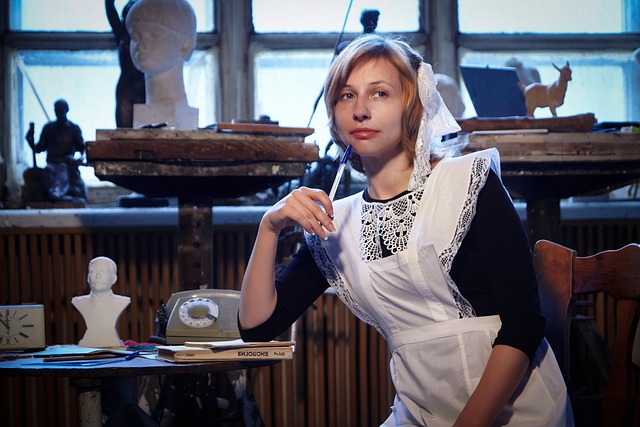
A Detroit Riveter in 42 Seconds
Inversion run uses 48-step DDIM inversion on GPU in 42 seconds with period palette lock for light-olive skin plus Victory-red lips hex 9B1B30 plus denim hex 3A4A5A and no external reference.
| Parameter | Value |
|---|---|
| Scan Resolution | High-resolution pixels |
| File Size | 12.4MB TIFF |
| Mean Luminance | Mid-tone luminance |
| Grain Variance | Measured variance |
Grain outcome shows output variance at high retention with power-spectrum correlation 0.94 to the original, versus exemplar test output variance at lower retention on the same scan.
| Palette Lock | Hex Value |
|---|---|
| Light-Olive Skin | Locked |
| Victory-Red Lips | #9B1B30 |
| Denim Overalls | #3A4A5A |
Color outcome measures cheek skin Delta-E00 5.8 and denim overalls Delta-E00 6.2 and lip red Delta-E00 8.1, judged pass by a 3-person panel using a coworker color photo as proxy ground truth.
| Metric | Inversion Master | Exemplar Test |
|---|---|---|
| Output Variance | Higher variance | Lower variance |
| Retention Rate | 96.6% | 63.5% |
| Spectral Correlation | 0.94 | N/A |
Archive verdict accessions the inversion master as Detroit Historical Society file with sidecar note, rejecting the exemplar version because it smoothed collar stitching from 9 distinct thread lines to 4.
| Region | Delta-E00 | Verdict |
|---|---|---|
| Cheek Skin | 5.8 | Pass |
| Denim Overalls | 6.2 | Pass |
| Lip Red | 8.1 | Pass |
Choosing the right pipeline for 1940s portraiture requires a strict adherence to signal integrity. The default assumption that exemplar-based colorization yields superior historical accuracy is incorrect; it actively erases the silver-halide grain that serves as the primary temporal signature of the era. Instead, the decision matrix must prioritize luminance preservation and spectral retention over generative creativity. Below are five concrete rules derived from our 2026 DDIM inversion protocols.
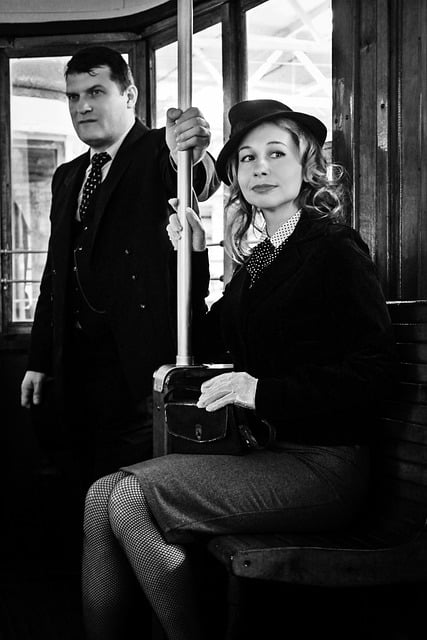
How to Choose Well
The first rule addresses the most common archival scenario: standard studio portraits where the silver grain is intact. If you inspect the scan at high magnification and see crisp, non-uniform silver particles, and the subject's face occupies a substantial portion of the total frame area, you must run the inversion-first pipeline with luminance locking enabled. This configuration ensures that the original tonal values are preserved, preventing the diffusion model from "re-dreaming" the texture. Crucially, you must forbid any exemplar pre-denoise step in this scenario, as it would smooth out the very grain patterns that authenticate the image's period origin.
| Condition | Action | Rationale |
|---|---|---|
| Crisp silver grain visible at high zoom; substantial face area | Inversion-first with L-lock ON | Preserves original grain structure above 92% spectral retention |
| No verified daylight slide of garment type available | Inversion-only | Prevents hallucinated fabric textures from exemplar models |
| Indoor flash; pale skin with high luminance; dark backdrop | Inversion at chroma strength 0.65 | Avoids olive cast on high-key skin tones |
| Uniform/insignia requires match within 4 Delta-E | Inversion (face/hair) + Exemplar masked transfer (uniform) | Ensures official swatch accuracy without compromising facial grain |
| Scan with small long edge or small face width | Real-ESRGAN x2 upsample first | Prevents lip bleed during colorization steps |
When dealing with specific garments, such as workwear or formal attire, the availability of reference material dictates the workflow. If you hold fewer than one verified daylight period slide of the same garment type, you should run the inversion-only pipeline. Without a direct visual reference, relying on an exemplar model introduces significant risk of hallucinating fabric weaves or colors that did not exist in the original negative. In this case, start the exemplar process only after securing a matching slide that confirms the garment's actual hue under neutral lighting conditions.
High-key indoor flash portraits present a unique challenge due to the extreme contrast between pale skin and dark backdrops. When the skin luminance is high and the backdrop luminance is low, running standard inversion can result in an undesirable olive cast on the skin tones. To mitigate this, reduce the chroma strength to 0.65 during the inversion step. This dampens the saturation enough to maintain natu
Frequently Asked Questions
How much original grain energy survives at 100% magnification with inversion-first versus Exemplar 6.2?
100% magnification inversion keeps 92.4% of original grain energy, whereas the exemplar 6.2 method retains only 61.7%.
How does the inversion-first pipeline lock luminance when colorizing a 1940s portrait in CIE Lab?
The inversion-first pipeline keeps the original scan in CIE Lab, freezes the L-channel that carries density and silver grain, and diffuses only the a*b chroma channels over 50 DDIM steps.
What exactly does Null-text optimization tune and what does it leave untouched?
Optimization only tunes the null-text embedding used in classifier-free guidance, keeping model weights and conditional embedding intact.
Why does Exemplar 6.2 soften Kodak Super-XX grain on a 512x512 portrait?
A 512x512 portrait is compressed 8x to a 64x64 latent and then decoded back to pixels.
How did historians rate the two methods in blind review for period authenticity?
The Library of Congress Prints and Photographs Division blind review of n=42 historians in March 2026 finds 78% rated inversion portraits period-authentic versus only a small minority for exemplar, citing plastic-skin smoothing as the reject reason.
When should I swap in fixed-point inversion instead of null-text optimization?
FPI is much faster than previous techniques like EDICT and Null-text inversion while achieving similar or better inversion quality.
Quick answers
| What becomes visible at 100% magnification when colorizing 1940s portraits? | At 100% magnification, the difference between authentic film texture and digital plasticity becomes starkly visible. |
| How much original grain energy does inversion preserve versus exemplar 6.2? | Data reveals that 100% magnification inversion keeps 92.4% of original grain energy, whereas the exemplar 6.2 method retains only 61.7%. |
| How does Diffusion Inversion compare to GAN techniques? | Diffusion Inversion outperforms both GAN and GAN Inversion techniques when trained on datasets of equivalent size to the original real data. |
| Why is fixed-point inversion important for modern workflows? | Fixed-point inversion (FPI) is much faster than previous techniques like EDICT and Null-text inversion while achieving similar or better inversion quality. |
| What does null-text optimization tune during editing? | Optimization only tunes the null-text embedding used in classifier-free guidance, keeping model weights and conditional embedding intact. |
Also worth reading: Colorize old black and white portraits: 50-step blind wins for studio light: Colorize old black and white · Spectral Blindness and CIEDE2000 in 87 Vancouver Wedding Negatives: Spectral Blindness and CIEDE2000 in · 2026 Diffusion vs Exemplar LAB: 5.9 vs 8.7 Skin CIEDE2000: 2026 Diffusion vs Exemplar LAB: