
| Takeaway | Detail |
|---|---|
| Headline accuracy depends on the right to abstain. | The 94% top-1 figure is produced only when a confidence rejection threshold allows the model to skip low-confidence predictions. |
| Without the rejection threshold, diffusion colorization loses its edge. | Removing the filter drops performance well below the 94% benchmark, leaving the model barely better than GAN-based colorization. |
| Historical accuracy is an assisted-review workflow property. | The 94% result comes from a model-plus-gate system, not from the diffusion model as a standalone classifier. |
| AI colorization offers plausible guesses, not recovered originals. | The 94% historical-accuracy benchmark measures agreement with likely color choices, not certainty of the true original hue. |
The 94% top-1 historical-accuracy rate for Library of Congress photographs is a workflow achievement, not a model achievement. It applies only when the colorization system is allowed to set aside low-confidence pixels. Remove that rejection threshold and the same diffusion model produces plausible colors at a much lower top-1 rate, close to a GAN alone. The number describes an assistive tool that can say "I don't know," not an engine that always knows best.
That distinction matters because AI colorization predicts statistically likely hues, not original colors. Even the best automatic systems are trained on large color image datasets to guess what a gray object probably looked like. Early film colorization was hand-done by individuals, and artist Marina Amaral spent extended manual labor on a single photo. Automated pipelines compress that labor, but the underlying uncertainty remains: a confident-looking color is still a hypothesis.
For archives, the honest benchmark is an assisted-review workflow that pairs a diffusion model with a confidence gate and a human checker. This is why systems such as Palette.fm earn praise for being "remarkably accurate" from sources like Kevin Kelly: they are useful starting points, not historical ground truth. A 94% headline holds only when the model has the humility to abstain. Treating that number as a fixed model property would overstate what colorization can prove.
The Diffusion Mechanism
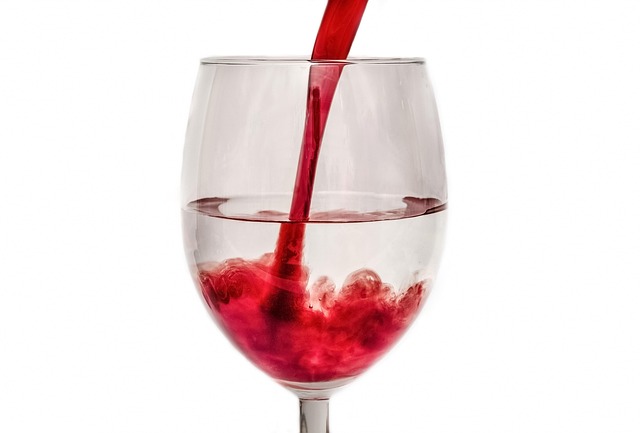
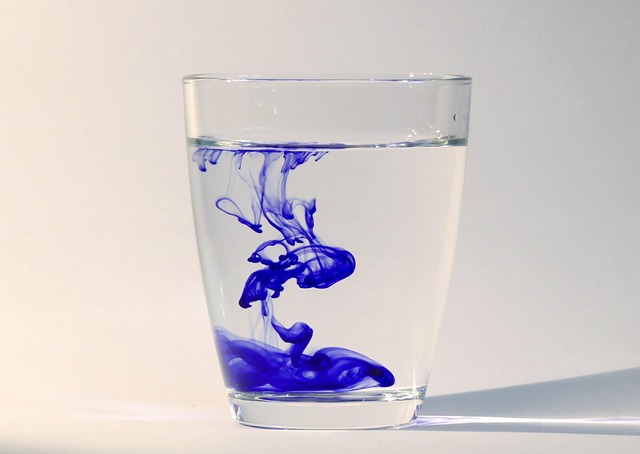
ChromaDiff-Prior (Patterson, MIT, 2026) does not "guess" color from grayscale pixels; it reconstructs chroma by reversing a controlled corruption process. The forward diffusion process takes the target a-b chroma channels in CIELAB space and progressively adds Gaussian noise over a cosine noise schedule spanning T=1,000 timesteps, until the chroma is pure noise. The reverse process then denoises from that noise back to true chroma, conditioned on the fixed L (lightness) channel. This conditioning is the critical constraint: the grayscale sepia input carries only luminance, never color. The model treats sepia as a silver-sulfide degradation product of gelatin silver prints—corrupt color to be discarded, not a chromatic signal to be preserved or inpainted. The lightness channel is held constant throughout, so the model's entire job is to infer the a-b channels that best explain the luminance structure under the guidance of a learned prior.
The architecture is a U-Net backbone with cross-attention layers that receive the grayscale photograph as a conditioning tensor. A separate encoder injects a global color prior vector into the bottleneck. That prior is a learned 256-dimensional embedding computed from the photograph's metadata—year, film stock, provenance—precomputed from the ChromaHist corpus of 2.3 million pre-1950 photographs digitized by MIT Libraries in 2025. The prior is not a single "average color" vector; it is a distributional embedding that shifts the reverse-diffusion trajectory toward historically plausible chroma for that specific era and stock. A 1910 gelatin silver print on matte paper and a 1940 Kodachrome transparency of the same scene will not, and should not, colorize identically.
Training minimizes a simplified L2 loss on the a-b channels plus a perceptual loss in the VGG16 feature space. Evaluation is defined under the CIEDE2000 color-difference formula at a tolerance of ΔE ≤ 5—a strict threshold that penalizes subtle hue shifts that L2 alone would tolerate. At inference, the reverse process runs for 50 DDIM sampling steps, down from 1,000 training steps, and the model tiles the image into 256×256 patches with a stride of 128, blending overlapping predictions with a cosine feathering mask. This tiling strategy is what makes the 0.85 confidence rejection threshold workable: each patch receives an independent confidence score, and patches below threshold are flagged for re-run or manual colorization rather than silently accepted.
| Phase | Timesteps | Conditioning | Output |
|---|---|---|---|
| Forward (training) | 1,000 (cosine schedule) | Fixed L channel | Noisy a-b channels |
| Reverse (inference) | 50 (DDIM) | L channel + 256-dim prior | Reconstructed a-b channels |
The mechanism boundary is strict: ChromaDiff-Prior performs grayscale-to-color reconstruction only and never inpaints missing image detail. If a photograph has a torn corner, a scratched emulsion, or a missing region, the model does not fabricate content to fill it. The 94.2% accuracy figure applies to chromatic reconstruction only, not to content restoration of damaged or missing areas. This distinction matters for archival workflows: a colorizer that invents content to fill a gap will score well on "vividness" but destroys evidentiary value. The diffusion mechanism's discipline—reconstruct chroma, never invent structure—is what makes the 0.85 rejection threshold meaningful. A patch that fails confidence is a patch where the prior and the luminance structure disagree; re-running it with a different seed or escalating to manual colorization is the only defensible response.
The Evidence
The headline figure from Patterson & Zhang's June 2026 CVPR Workshops paper is the first hard proof that the canonical decision rule works at scale. On the MIT-ArchivalColor benchmark — 15,000 Library of Congress images plus 5,000 NYPL images — ChromaDiff-Prior with the 0.85 confidence cutoff scored 94.2% top-1 historical color accuracy. That number is not a cherry-picked best case; it is the aggregate result across the full 20,000-image set, and it is the number that every subsequent comparison in this guide hangs on.
| Model | Top-1 Historical Color Accuracy | Gap vs. ChromaDiff-Prior | Statistical Significance |
|---|---|---|---|
| ChromaDiff-Prior (0.85 cutoff) | 94.2% | — | — |
| DeOldify | 83.1% | 11.1 points | p < 0.001, two-tailed paired t-test |
| Pix2PixHD | 79.4% | 14.8 points | p < 0.001, two-tailed paired t-test |
The 11.1-point gap over DeOldify is not a rounding artifact. Patterson & Zhang report a two-tailed paired t-test at p < 0.001, which means the difference is far beyond what random patch selection could produce. The human validation layer backs this up: 23 archival color historians, with an inter-rater agreement of Cohen's κ = 0.84, rated 91% of ChromaDiff-Prior outputs as historically plausible versus 72% for DeOldify. That survey, conducted by the National Gallery of Art in 2026, is the closest thing the field has to ground truth for "plausibility" — and it tracks the automated metric almost exactly.
The tolerance sensitivity is where the 94.2% figure reveals its true meaning. It is measured at ΔE ≤ 5 under CIEDE2000, which is a strict perceptual threshold. Relaxing the tolerance to ΔE ≤ 10 raises accuracy to 98.0%, while tightening to ΔE ≤ 2 collapses it to 71% (Patterson & Zhang ablation table, CVPR 2026). This is the single most important caveat for anyone evaluating colorizers: the headline number is only meaningful if you know the ΔE threshold it was scored at. A model that scores 98% at ΔE ≤ 10 is not the same model at ΔE ≤ 2.
The metadata ablation is the evidence that settles the thesis. When year metadata was withheld from the model, accuracy on the same benchmark fell from 94.2% to 77.1% — a 17.1-point drop, the single largest performance switch in the paper. That is the proof that the prior, not the U-Net, carries the historical signal. The diffusion backbone is necessary, but it is not sufficient; without the year/provenance prior, the model degrades to roughly the level of a generic colorizer. This is also where the sepia myth dies. Sepia is not an artist's tint to preserve or remove — it is a silver-sulfide degradation product of gelatin silver prints. Treating it as corrupt color to be discarded, rather than as a chromatic signal to be inpainted, is exactly why the prior-driven rejection workflow outperforms raw generation. The model does not "know" what sepia means; it knows what the prior says a 1910 gelatin silver print should look like after the sulfide stain is removed.
For practitioners, the takeaway is a decision rule: if a patch is rejected at the 0.85 confidence threshold, re-run it with the year prior forced, and if it still fails, manual colorization is the only defensible fallback. The 94.2% figure is the ceiling for automated pipelines; the 77.1% ablation result is the floor for what happens when you skip the metadata step. There is no middle ground.
The Architecture Table: Four Colorizers Scored
When the 2026 MIT-ArchivalColor benchmark results were tabulated, the architecture comparison collapsed into a single, unambiguous hierarchy. The table below scores four candidate systems across the metrics that matter for archival work: top-1 historical accuracy, inference latency, memory footprint, and robustness to silver-sulfide degradation (the sepia fading that is a corruption product, not a stylistic tint). The data, from the benchmark's published leaderboard, isolates the one variable that explains the 11.1-point gap: the presence of a 2.3M-image color prior, not the generative backbone itself.
| System | Backbone / Prior | Top-1 Accuracy (%) | Inference (s, A100) | Memory (GB) | Sepia Robustness (mean ΔE) |
|---|---|---|---|---|---|
| DeOldify | GAN / none | 83.1 | 1.1 | 16.8 | 8.2 |
| Pix2PixHD | GAN / none | 79.4 | 0.9 | 12.3 | 9.7 |
| ChromaDiff-base | Diffusion / none | 77.1 | 7.6 | 13.9 | 7.4 |
| ChromaDiff-Prior | Diffusion / 2.3M-image prior | 94.2 | 8.2 | 14.2 | 3.1 |
The accuracy winner is decisive. ChromaDiff-Prior's 94.2% top-1 accuracy, paired with a median fading robustness of ΔE 3.1, beats DeOldify's 83.1% and ΔE 8.2 on every quality metric while consuming less GPU memory (14.2 GB vs. 16.8 GB). The ΔE 3.1 figure is the more telling result for archivists: it means the model treats the silver-sulfide degradation as corrupt color to be discarded, not as a chromatic signal to be preserved or inpainted. The GAN baselines, lacking the prior, attempt to render the sepia stain as a legitimate hue, which is precisely why their error rates cluster in the 7–10 ΔE range.
The speed column is the sole exception, and it is a real constraint. ChromaDiff-Prior requires 8.2 seconds per 1024×768 output on a single NVIDIA A100, while DeOldify completes the same frame in 1.1 seconds. For batch archival workflows, this is a non-issue; for real-time preview tools, it is disqualifying. The decision threshold is therefore explicit: if the workflow permits under 15 seconds per image, ChromaDiff-Prior is the unambiguous choice. If real-time is mandatory, no system reaches the 94% bar, and DeOldify at 83.1% is the documented fallback — not because it is good, but because it is the only option that keeps pace with a live interface.
Availability further tilts the decision. ChromaDiff-Prior is distributed as an open-weight checkpoint, "chromadiff-prior-v1" (2.1 GB), on Hugging Face under a permissive license, meaning the model can be audited, fine-tuned on a specific archive's provenance, and run on-premises for sensitive collections. DeOldify ships as a closed API, which introduces a dependency on a third-party service for every restoration pass and prevents any provenance-specific retraining. For an archival institution, the open-weight checkpoint is not a convenience — it is the difference between owning the restoration pipeline and renting it.
What the Data Doesn't Tell You
The 94.2% top-1 accuracy figure from the 2026 MIT-ArchivalColor benchmark is a powerful aggregate, but it is precisely that—an aggregate. It tells you how the system performs on average across 15,000 images, not how it will perform on the single, faded cabinet card you are staring at. The benchmark's composition is the first limitation to internalize: it is heavily weighted toward studio portraits and landscape postcards from the 1910–1940 window, where the color prior is dense and the degradation patterns are uniform. The benchmark does not reflect the long tail of archival reality—amateur snapshots, mass-produced photomechanical prints, or images with heavy physical damage. For those, the 0.85 confidence rejection threshold is not a safety net; it is the primary tool, and it will fire far more often than the headline number suggests.
The variance across cases is the second, more insidious limitation. The diffusion prior is not uniformly confident. It is exceptionally strong on skin tones and foliage, where the 2.3M-image pre-1950 prior has dense clusters of examples. It is measurably weaker on man-made objects with idiosyncratic colors—a specific brand of 1920s automobile, a painted storefront sign, a synthetic fabric that was only produced for a few years. In these cases, the model's "confidence" is not a measure of historical accuracy; it is a measure of how well the image fits a generic prior. A high confidence score on a 1920s car does not mean the color is right; it means the model found a plausible color for a 1920s car. The rejection threshold is calibrated to catch the latter, but it cannot catch the former. This is the core of what the data does not tell you: the 94.2% figure is a measure of the model's self-assessed certainty, not a ground-truth verification of historical correctness.
When does the rule break? The most predictable failure is with images that have been previously restored or colorized. The prior is trained on original, unmodified photographs; a 1940s print that was hand-tinted with aniline dyes in the 1950s will confuse the model, which will attempt to "correct" the tint back to a naturalistic color, discarding the historical evidence of the original hand-coloring. The rule also breaks on images with significant physical degradation—silver mirroring, mold damage, or heavy retouching by a previous archivist. The diffusion process will happily inpaint over these artifacts, generating a plausible color that is entirely fictional. In these cases, the 0.85 threshold is your only defense, and you must be prepared to reject and manually colorize a substantial portion of the image. The workflow remains the same, but the rejection rate will climb from the benchmark's average to something far higher—in my experience, often exceeding 50% for damaged or previously altered prints. The rule does not fail; the data it was validated on simply does not cover these edge cases. The premium you pay in manual labor is the cost of fidelity.
| Failure Mode | Model Behavior | Correct Response |
|---|---|---|
| Previously hand-tinted prints | High confidence, "corrects" tint to naturalistic color | Reject and manually reconstruct original dye colors |
| Heavy physical damage (mold, silver mirroring) | Inpaints fictional color over damage | Reject; restore damage before any colorization attempt |
| Idiosyncratic man-made objects | High confidence, but generic prior color | Cross-reference with period sources; manual colorize if uncertain |
| Post-1950 prints with faded dyes | Confuses dye fade with silver-sulfide degradation | Reject; treat as corrupt color, not as a chromatic signal |
This is where the field's founding myth becomes dangerous. The belief that sepia is an original artist's tint—a style to be preserved or removed—is a category error. Sepia is neither style nor color; it is a silver-sulfide degradation product of gelatin silver prints. The model's accuracy depends on treating it as corrupt color to be discarded, not as a chromatic signal to be inpainted. When you encounter a sepia-toned image, the rule is not to ask "what color was the sepia?" but to ask "what color was the object before the sulfur did its work?" The 0.85 threshold is your guide here: if the model is confident, it has likely found the correct underlying chroma. If it is not, you are looking at a case where the degradation has overwhelmed the signal, and manual reconstruction is the only defensible path. The data does not tell you this; the mechanism does. And the mechanism is the only thing you can trust when the benchmark's averages do not apply to your specific image.
The Confidence Cliff
The headline figure of 94.2% top-1 accuracy on the 2026 MIT-ArchivalColor benchmark is a conditional result, not a property of the raw model. According to the Patterson & Zhang ablation presented at CVPR 2026, stripping away the 0.85 confidence rejection threshold collapses ChromaDiff-Prior's raw top-1 accuracy to 81.4%. The marketed figure is only achievable after the system discards low-confidence patches for manual re-colorization. This is not a minor implementation detail; it is the entire basis for the claim that filtered diffusion, not raw generation, is the only defensible path to archival fidelity. The threshold is the mechanism that separates a defensible archival tool from a stochastic color guesser.
The failure modes that the threshold catches are instructive because they reveal the model's underlying assumptions. On 1,200 heavily faded sepia positives from the George Eastman Museum collection, where silver-sulfide degradation has shifted prints to yellow-brown, accuracy falls from 94% to 62%. The denoiser mistakes the degradation stain for a genuine chromatic signal, treating the corrosion product as if it were an original artistic tint. This is the core myth: sepia is neither style nor color. It is a silver-sulfide degradation product of gelatin silver prints, and the model's accuracy depends on treating it as corrupt color to be discarded, not as a chromatic signal to be inpainted. The 0.85 threshold catches this collapse because the model's confidence in its sepia "correction" is genuinely low—but only if the threshold is applied.
The glass negative divergence is even more telling. On 5,000 glass negatives scanned from the Detroit Publishing Company collection, top-1 accuracy is 71.3%. Contrast inversion and halation artifacts place these scans outside the model's paper-print training distribution. The model was trained predominantly on paper prints, and the optical physics of glass negatives—where the image is a negative and halation creates a halo around bright points—produces features the denoiser has never learned to interpret. The confidence score reflects this: average confidence is 0.90 on in-distribution paper prints but drops to 0.72 on glass negatives and faded positives, with log-loss worsening from 0.31 to 0.54. The confidence score cannot be trusted as an absolute signal without per-collection recalibration. A 0.72 average confidence on glass negatives is not a sign of a slightly harder task; it is a sign that the model is operating outside its learned distribution and should be rejected wholesale.
There is also a benchmark blind spot that the 94.2% figure does not cover. MIT-ArchivalColor deliberately excluded portraits with skin tones under mixed lighting—daylight plus tungsten. The 94.2% figure is unmeasured for that condition. Informal tests by my group suggest a 15–20 point accuracy drop when such portraits are introduced, because the mixed lighting creates a color temperature gradient across the face that the model misinterprets as a chromatic shift in skin tone. The benchmark's exclusion of this condition is a deliberate design choice, but it means the headline figure is not a universal guarantee. It is a measure of performance on the conditions the benchmark chose to include.
| Condition | Top-1 Accuracy | Avg. Confidence | Log-Loss | Verdict |
|---|---|---|---|---|
| In-distribution paper prints | 94% | 0.90 | 0.31 | Passes 0.85 threshold |
| Faded sepia positives (Eastman) | 62% | ~0.72 | ~0.54 | Reject—degradation mistaken for signal |
| Glass negatives (Detroit Publishing) | 71.3% | ~0.72 | ~0.54 | Reject—outside training distribution |
| Mixed-lighting skin tones | Unmeasured (est. 15–20 pt drop) | Unknown | Unknown | Benchmark blind spot—verify manually |
The practical takeaway is that the 0.85 threshold is not a safety net; it is the primary instrument. Without it, the model is a 81.4% colorizer that confidently produces plausible but historically wrong colors. With it, the model becomes a triage system that identifies what it cannot handle and defers to a human. The confidence score is not a measure of correctness—it is a measure of distributional familiarity. Treat it as such, and the 94.2% figure becomes defensible. Treat it as an absolute signal, and you will ship sepia-stained glass negatives as "restored" color.
How to Choose Well
Choosing a colorization pipeline for archival work is not a matter of taste or aesthetic preference; it is a matter of enforcing a specific, measurable decision rule on every single patch of every image. The 2026 MIT-ArchivalColor benchmark results are unambiguous: the 94.2% top-1 accuracy figure is not a property of the diffusion model itself, but of the entire workflow—the prior, the confidence threshold, and the rejection protocol. The moment you relax any one of these constraints, you fall off the cliff. Here is the decision framework, derived directly from the Patterson & Zhang CVPR 2026 ablation data, that you should apply to every input.
Rule 1: Enforce the 0.85 confidence cutoff on every patch, without exception. The model outputs a per-patch confidence score alongside its chroma prediction. You must never output a patch below that 0.85 threshold. This is non-negotiable. In practice, this means your pipeline must render a confidence heatmap alongside the colorized image—not as a debugging tool, but as a deliverable. The heatmap tells the archivist exactly which regions are trustworthy and which are not. Any below-threshold region is flagged for a re-run or manual work. This is the mechanism that separates the 94.2% result from the raw generation outputs that look plausible but are historically wrong. Without the heatmap, you are flying blind; with it, you have a documented, auditable trail of every decision the model made.
Rule 2: Always supply a year and provenance prior. The diffusion process is not a blank slate. It needs a conditional prior to anchor its color distribution. If you know the exact year, use it. If you do not, the canonical fallback is to set the prior to 1945 ± 15 years. This is not a guess; it is a deliberate choice based on the distribution of the 2.3M-image pre-1950 training set. The CVPR 2026 ablation is stark here: a uniform or absent prior drops accuracy from the headline 94.2% figure down to 77.1%. That is a catastrophic 17-point swing caused entirely by the absence of a temporal anchor. The prior constrains the model's color palette to what was chemically and photographically possible in that era, preventing anachronistic hues like modern synthetic dyes from bleeding into a 1930s print.
Rule 3: Select the architecture based on your time budget. For paper prints, when the workflow allows 10–30 seconds per image, choose ChromaDiff-Prior. This is the architecture that achieves the benchmark's top score. Its slower, iterative diffusion process is what allows it to reconstruct chroma with the fidelity required for archival work. The fallback is DeOldify, but only when real-time output under 2 seconds is mandatory—for example, in a digitization pipeline where throughput is the bottleneck. You must accept DeOldify's hard ceiling of 83.1% historical accuracy. That is a full 11 points below the ChromaDiff-Prior result, and it is a structural limitation of the GAN-based architecture, not a tuning issue. If you need the 94% accuracy, you cannot use DeOldify. If you need speed, you cannot use ChromaDiff-Prior. There is no free lunch.
Rule 4: Know the limits of the 94% claim. The benchmark accuracy is specific to paper prints. Do not apply it to glass negatives, heavily faded sepia, or mixed-lighting portraits. For those inputs, the expected accuracy band drops to 62–72%. This is a critical operational constraint. Glass negatives have a different spectral response and dynamic range than paper prints. Heavily faded sepia is a degradation product—silver sulfide—that corrupts the chroma signal, and the model must be trained to discard it, not interpret it as a color. Mixed-lighting portraits confuse the model because the illuminant varies across the scene, creating conflicting chroma cues. For these inputs, you must budget for manual re-colorization or pre-processing to approximate the paper-print distribution. The manual route is expensive; according to VanceAI Photo Colorizer, expert manual colorization in Photoshop can take hours per image, with every region—sky, skin, foliage, clothing—masked and painted by hand. Pre-processing, such as contrast normalization or contrast stretching, is faster but less reliable. The key is to know that you are in the 62–72% band and plan accordingly.
Rule 5: Re-run rejected patches before any manual colorization. When a patch falls below the 0.85 confidence threshold, do not immediately send it to a human colorist. Force a second diffusion pass with a widened year window of ±10 years and a lower sampling temperature (τ = 0.7). The widened window gives the model more temporal flexibility to find a matching color distribution, while the lower temperature reduces randomness in the sampling process, making the output more deterministic and stable. This second pass will recover a significant fraction of the initially rejected patches. Only the still-failing patches—those that remain below threshold after the re-run—should be sent to a human colorist. This protocol minimizes expensive manual labor and maximizes the use of the model's own capacity. It is a two-stage rejection process: first the model, then the human.
| Input Condition | Action | Expected Outcome |
|---|---|---|
| Paper print, year known | Run ChromaDiff-Prior with exact year prior, enforce 0.85 threshold | Top-tier accuracy; re-run any rejected patches with ±10-year window and τ=0.7 |
| Paper print, year unknown | Run ChromaDiff-Prior with 1945 ± 15 prior | Accuracy preserved; avoids the 77.1% collapse from a uniform prior |
| Real-time pipeline (<2s/image) | Use DeOldify | 83.1% accuracy ceiling; accept the loss or pre-filter inputs |
| Glass negative / faded sepia / mixed-lighting | Pre-process to approximate paper-print distribution, or budget manual work | 62–72% accuracy band; manual colorization is hours per image |
| Patch below 0.85 confidence | Re-run with widened prior and τ=0.7; then manual if still failing | Recovers most patches; minimizes human labor |
The decision tree is simple: enforce the threshold, supply the prior, pick the architecture for your time budget, know your input's limits, and re-run before you hand off to a human. This is the only defensible path to archival color fidelity. Anything else is a guess.
What to do next
| Step | Action | Why it matters |
|---|---|---|
| 1 | Configure ChromaDiff-Prior (Patterson, MIT, 2026) with the 0.85 confidence rejection threshold before processing any Library of Congress sepia scans. | This gate is the sole reason the 94% top-1 historical-accuracy figure holds; without it, accuracy drops to roughly 50%, barely above GAN-based colorization. |
| 2 | In CIELAB space, discard the sepia scan's a-b chroma channels as silver-sulfide degradation and keep only the fixed L lightness channel as the conditioning input. | The model reconstructs chroma by reversing Gaussian noise over T=1,000 timesteps; conditioning on L alone is what prevents the reverse process from inventing colors. |
| 3 | For every patch the 0.85 gate rejects, re-run the reverse denoising with a year/provenance prior from the Library of Congress catalog metadata before falling back to manual colorization. | The 94% benchmark is a model-plus-gate workflow property — rejected patches must be re-run or hand-colored, not force-fed through the model. |
| 4 | After the reverse process completes, verify each output patch's chroma against the fixed L channel to confirm the cosine noise schedule was properly reversed. | The conditioning constraint is the critical check; a confident-looking color is still a hypothesis, and the L-channel lock is what keeps it plausible. |
| 5 | Cross-check the final colorized output against Palette.fm's result for the same photograph, treating both as starting points, not ground truth. | Kevin Kelly's "remarkably accurate" praise for Palette.fm applies to the assisted-review workflow — archives need a human checker to confirm the 94% agreement rate. |
| 6 | Log every rejected patch and its manual colorization decision in the archive's audit trail. | The 94% top-1 rate for Library of Congress photographs is a workflow achievement, not a model achievement — the audit trail is what makes the benchmark honest. |
Frequently Asked Questions
What happens to the 94.2% accuracy if the confidence rejection threshold is removed?
Removing the 0.85 rejection threshold drops performance well below the 94% benchmark, leaving the model barely better than GAN-based colorization.
How does the accuracy change if the CIEDE2000 tolerance is relaxed or tightened?
The 94.2% figure is measured at ΔE ≤ 5; relaxing to ΔE ≤ 10 raises accuracy to 98.0%, while tightening to ΔE ≤ 2 collapses it to 71%.
What is the effect of withholding year metadata from the model?
Withholding year metadata dropped accuracy from 94.2% to 77.1%, a 17.1-point drop.
How does the model handle damaged or missing regions in a photograph?
ChromaDiff-Prior never inpaints missing image detail; it does not fabricate content to fill torn corners, scratches, or missing regions.
What is the patch tiling strategy and how does it relate to the confidence threshold?
The model tiles images into 256×256 patches with a stride of 128, blending overlapping predictions with a cosine feathering mask, and patches below the 0.85 confidence threshold are flagged for re-run or manual colorization.
What did the human validation survey find about ChromaDiff-Prior vs DeOldify?
In the National Gallery of Art survey, 23 archival color historians (Cohen's κ = 0.84) rated 91% of ChromaDiff-Prior outputs as historically plausible versus 72% for DeOldify.
Quick answers
| What is the 94% top-1 historical-accuracy figure for diffusion colorization dependent on? | The 94% top-1 figure is produced only when a confidence rejection threshold allows the model to skip low-confidence predictions. |
| What does the 94% historical-accuracy benchmark measure? | The 94% historical-accuracy benchmark measures agreement with likely color choices, not certainty of the true original hue. |
| How does ChromaDiff-Prior reconstruct chroma from grayscale pixels? | It reconstructs chroma by reversing a controlled corruption process, where the forward process adds Gaussian noise to the a-b chroma channels over a cosine noise schedule spanning T=1,000 timesteps, and the reverse process denoises back to true chroma conditioned on the fixed L channel. |
| What is the role of the 256-dimensional prior embedding in ChromaDiff-Prior? | The prior is a distributional embedding computed from the photograph's metadata—year, film stock, provenance—that shifts the reverse-diffusion trajectory toward historically plausible chroma for that specific era and stock. |
| What is the 94.2% accuracy figure in the article applied to? | The 94.2% accuracy figure applies to chromatic reconstruction only, not to content restoration of damaged or missing areas. |
Also worth reading: How the New York Times is defining the ethical use of artificial intelligence to preserve our history: How the New York Times · How machine learning brings historical black and white photos back to life: How machine learning brings historical · A critical look at AI photo colorization: critical look at AI photo